Campus Deep-Dive: Harbin Institute of Technology — China's Aerospace Technology Hub
September 7, 2026 · CSCA Gateway Team
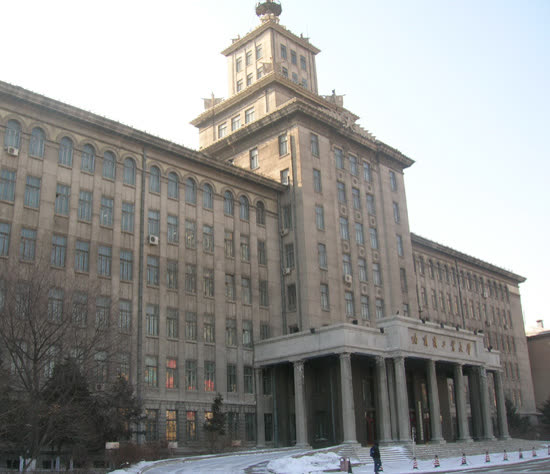
Harbin Institute of Technology (哈尔滨工业大学, HIT), founded in 1920 in Harbin, is the C9 campus most known for aerospace — HIT houses China’s oldest School of Astronautics (founded 1987) and is credited with building China’s first university-built satellite, as well as pioneering a space-to-ground laser communication demonstration.
Quick Facts
- Location
- Harbin
- Founded
- 1920
- Membership
- C9 League, Project 985, Project 211
- Strengths
- Aerospace, Mechanical Eng., Materials
Latest Rankings
- QS World University Rankings 2026
- #256 globally
- Shanghai Ranking / ARWU 2025
- #101 globally
- EduRank 2026
- #314 globally, #15 in China
According to EduRank 2026, HIT ranks #1 in the world for Automation and Control Engineering, and #2 in the world for Environmental Engineering.
Top Programs
Beyond aerospace, HIT is historically nicknamed the "cradle of engineers" in China for its strength in Mechanical Engineering and Welding/Manufacturing Engineering since its founding. Materials Science and Robotics/Control Engineering are also core research strengths of this campus.
How This Relates to CSCA
For engineering applicants to HIT, especially those interested in aerospace or mechanical engineering, a strong combined CSCA Mathematics and Physics score is the main evaluation criterion — similar to other engineering-focused C9 campuses. Since HIT is less internationally famous than Tsinghua/Peking, applicants with a solid CSCA score often have relatively better admission odds compared to applying to Tsinghua/Peking for similar majors.
What to Prepare
- Strong CSCA Mathematics and Physics scores, the general standard for engineering majors at HIT
- A specific interest in aerospace can be a strong essay plus, since it’s HIT’s core academic identity
- Consider HIT as a strategic alternative if your top target (Tsinghua/Peking) feels too competitive, since its engineering programs remain world-class